
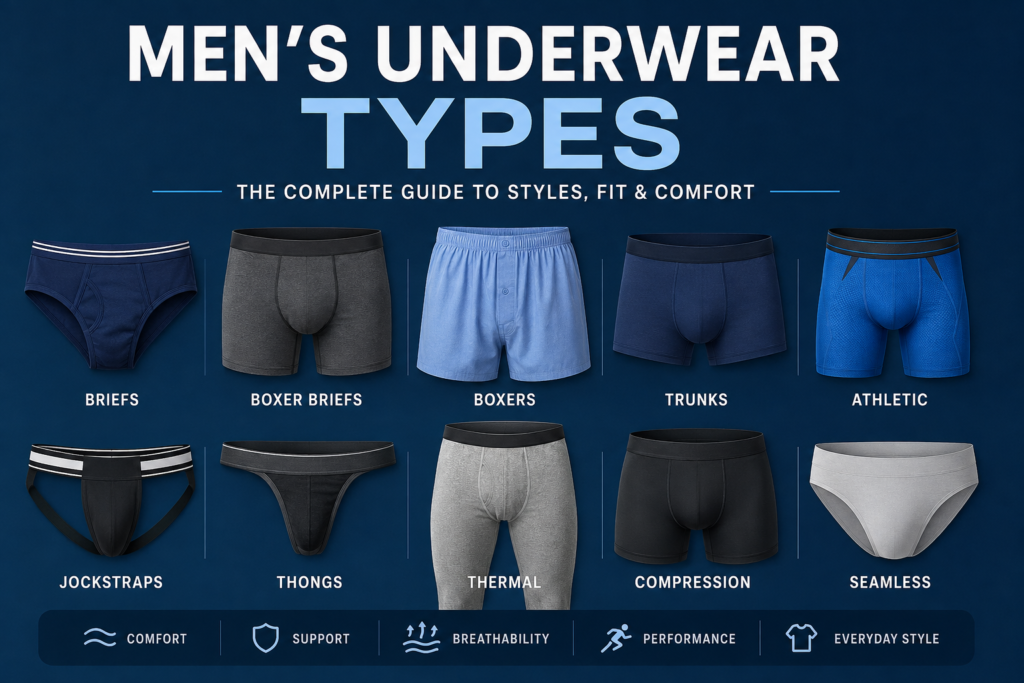
Choosing the right underwear is more important than many men realize. The right pair can improve comfort throughout the day, provide the support you need during physical activity, reduce irritation, and work better with different types of clothing. However, with so many styles available, it can be difficult to know which type of men’s underwear is best for you.
Men’s underwear comes in many designs, including briefs, boxer briefs, boxers, trunks, thongs, jockstraps, long underwear, and athletic underwear. Each style has different characteristics, advantages, and potential drawbacks. Some provide maximum support, while others prioritize freedom of movement. Some are ideal for wearing under slim-fit pants, whereas others work better with loose clothing or for sleeping.
This comprehensive guide to men’s underwear types explains the most popular styles, their differences, the best situations for each type, important fabric choices, sizing considerations, and practical tips for finding comfortable underwear.
What Are the Main Types of Men’s Underwear?
The most common men’s underwear types include:
- Briefs
- Boxer briefs
- Boxers
- Trunks
- Athletic underwear
- Jockstraps
- Thongs
- Long underwear and thermal underwear
- Compression underwear
- Bikini-style underwear
- Seamless underwear
- Performance underwear
Although these categories can overlap, each style has a distinct design and purpose.



1. Men’s Briefs
Briefs are one of the most traditional and recognizable types of men’s underwear. They typically have a supportive front pouch and provide coverage around the waist and buttocks while leaving most of the upper legs uncovered.
Briefs are available in different rises. High-rise briefs sit higher around the waist, while low-rise versions sit closer to the hips.
Why Men Choose Briefs
One of the biggest advantages of briefs is their compact design. Because they do not extend down the thighs, they leave the legs completely free.
This can make briefs particularly comfortable for men who dislike excess fabric around their thighs. They can also work well under fitted trousers, jeans, dress pants, and shorts.
Briefs can provide good support because the front pouch keeps everything relatively secure. This makes them popular among men who prefer a supportive fit.
Advantages of Briefs
- Excellent freedom around the thighs
- Compact design
- Good everyday support
- Suitable under fitted clothing
- Less fabric than many other styles
- Available in many rises and designs
Potential Disadvantages
Some men may find traditional briefs less comfortable because they expose more of the upper thigh. Others may prefer additional coverage.
The fit also matters considerably. Briefs that are too tight can cause discomfort, while briefs that are too loose may not provide adequate support.
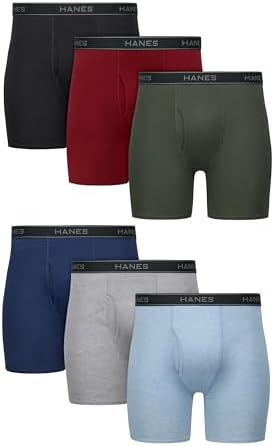
2. Boxer Briefs
Boxer briefs combine features of traditional briefs and boxers. They generally have a supportive pouch similar to briefs but extend down the thighs like short boxer-style underwear.
Boxer briefs have become one of the most popular men’s underwear styles because they offer a balance between support and coverage.
Why Boxer Briefs Are Popular
The longer legs can help reduce friction between the thighs. This can be particularly useful for men who experience thigh rubbing when walking, exercising, or spending long periods outdoors.
Boxer briefs can also work well under many types of clothing. They provide more coverage than briefs without the loose fabric associated with traditional boxers.
Advantages of Boxer Briefs
- Good combination of support and coverage
- Helps reduce thigh friction
- Works well for everyday use
- Suitable for many body types
- Good option for active lifestyles
- Available in cotton, modal, microfiber, and performance fabrics
Potential Disadvantages
Longer boxer briefs may feel warmer than briefs, especially in hot weather. If the leg openings are too tight, they can also ride up or create pressure around the thighs.
Choosing the correct size and a comfortable leg opening can make a major difference.
3. Men’s Boxers
Traditional boxers are loose-fitting underwear with a rectangular or relaxed shape. They generally provide more freedom around the legs than briefs or boxer briefs.
Boxers became especially popular because of their loose, comfortable construction.
Benefits of Boxers
The loose design allows substantial airflow and freedom of movement. This makes traditional boxers a popular choice for sleeping, relaxing at home, or wearing underneath loose-fitting clothing.
They are also available in many materials and patterns.
Advantages
- Loose and relaxed fit
- Excellent freedom of movement
- Good airflow
- Comfortable for sleeping
- Available in many patterns and fabrics
- Suitable under loose trousers and shorts
Disadvantages
Traditional boxers can bunch up under slim jeans or fitted trousers. The loose fabric may also provide less support than briefs or boxer briefs.
For this reason, boxers may not be the best option for running, cycling, or other activities requiring secure support.
4. Men’s Trunks
Trunks are a shorter version of boxer briefs. They generally have a square-cut appearance and shorter legs.
They provide a middle ground between briefs and boxer briefs.
Trunks can be especially useful for men who like the support and coverage of boxer briefs but prefer less fabric around their thighs.
Advantages of Trunks
- Modern appearance
- Good support
- Shorter leg length
- Less fabric than boxer briefs
- Works well under many outfits
- Comfortable for everyday wear
Potential Disadvantages
Because the legs are relatively short, trunks may not prevent thigh-to-thigh friction as effectively as longer boxer briefs.
The short leg can also ride upward depending on the fabric, body shape, and fit.
5. Athletic Underwear
Athletic underwear is designed specifically for physical activity. It may include boxer briefs, compression shorts, briefs, and other performance-oriented designs.
These garments often use moisture-managing fabrics designed to move sweat away from the skin.
Why Athletic Underwear Is Different
During exercise, underwear is exposed to more movement, sweating, friction, and heat than normal everyday underwear.
Athletic underwear therefore tends to focus on:
- Moisture management
- Stretch
- Breathability
- Secure support
- Reduced friction
- Quick drying
- Freedom of movement
Best Uses
Athletic underwear can be useful for:
- Running
- Gym workouts
- Hiking
- Cycling
- Sports
- Travel
- Outdoor activities
For exercise, a supportive and moisture-managing pair can generally be more practical than loose traditional boxers.
6. Compression Underwear
Compression underwear is designed to fit closely against the body. It is commonly used by athletes and active individuals.
Compression garments can provide a secure feel and reduce excessive movement of fabric during physical activity.
Compression vs Regular Underwear
Regular underwear generally prioritizes everyday comfort, while compression underwear places greater emphasis on a close-fitting, supportive construction.
However, compression does not automatically mean tighter is better. Excessively tight underwear can be uncomfortable and may cause pressure, chafing, or skin irritation.
The correct size is essential.
7. Jockstraps
Jockstraps are specialized underwear traditionally designed for athletic activities. They usually have a supportive front pouch and straps around the buttocks and hips, leaving much of the rear uncovered.
Jockstraps are particularly associated with sports because they can provide support while allowing substantial airflow and freedom around the legs.
Some athletic versions can be worn with protective cups for sports where additional protection is necessary.
Advantages
- Strong support
- Minimal fabric around the legs
- Excellent freedom of movement
- Useful for certain sports
- Good ventilation
Disadvantages
The design provides less overall coverage than most other underwear styles, so it may not appeal to everyone.
8. Men’s Thongs
Men’s thongs are designed with minimal rear coverage. They typically feature a front pouch and a narrow strip of fabric at the back.
They are worn by some men because they provide minimal visible fabric and can work well under certain fitted outfits.
Why Wear a Men’s Thong?
Potential reasons include:
- Minimal fabric
- Reduced visible underwear lines
- Freedom around the thighs
- Personal preference
- Certain clothing styles
Comfort depends heavily on the design, material, pouch shape, waistband, and correct sizing.
A thong that is too tight may cause discomfort or irritation.
9. Bikini-Style Men’s Underwear
Men’s bikini underwear is generally smaller and more revealing than traditional briefs. It typically provides a supportive front pouch with reduced coverage around the sides and back.
This style is sometimes chosen for its minimalist design and freedom around the legs.
As with all underwear, fit should be the priority. The garment should remain secure without creating excessive pressure.
10. Long Underwear and Thermal Underwear
Long underwear, sometimes called thermal underwear or long johns, is designed to provide additional warmth.
It typically extends down the legs and is worn underneath trousers during cold weather.
Best Uses
Long underwear is useful for:
- Cold-weather work
- Winter travel
- Hiking
- Skiing
- Camping
- Outdoor sports
- Cold climates
Modern thermal underwear is often made from lightweight synthetic fabrics or wool blends designed to provide warmth without excessive bulk.
11. Seamless Men’s Underwear
Seamless underwear is designed with fewer prominent seams. It can be particularly useful underneath fitted clothing.
The goal is to reduce visible lines and improve the smoothness of the outer appearance.
Benefits
- Minimal visible underwear lines
- Smooth construction
- Comfortable under fitted clothes
- Useful for formal clothing
- Often lightweight
Seamless does not necessarily mean completely without seams. Different manufacturers use different construction techniques.
12. Performance Underwear
Performance underwear is a broad category that generally refers to underwear designed with specialized fabrics and construction.
Features may include:
- Moisture management
- Stretch
- Breathability
- Quick drying
- Odor-resistant materials
- Supportive pouches
- Flat seams
- Ventilation panels
Performance underwear can be especially useful for men who exercise regularly or spend long periods active.
Men’s Underwear Types Compared
Choosing between underwear styles becomes easier when you understand what each one prioritizes.
| Underwear Type | Support | Coverage | Leg Freedom | Best For |
|---|---|---|---|---|
| Briefs | High | Moderate | Excellent | Everyday wear |
| Boxer briefs | High | High | Moderate | Everyday and active use |
| Boxers | Low–Moderate | High | Excellent | Relaxing and sleeping |
| Trunks | High | Moderate | Good | Everyday wear |
| Athletic underwear | High | Varies | High | Exercise |
| Compression underwear | High | Moderate–High | Moderate | Sports |
| Jockstraps | High | Low | Excellent | Certain sports |
| Thongs | Moderate–High | Low | Excellent | Minimal coverage |
| Thermal underwear | Moderate | High | Moderate | Cold weather |
| Seamless underwear | Varies | Varies | Varies | Fitted clothing |
How to Choose the Right Men’s Underwear
There is no single best underwear type for every man. The ideal choice depends on body shape, activity level, clothing, weather, and personal preference.
Consider Your Daily Activities
Your routine should influence your underwear choice.
For office work, briefs, boxer briefs, or trunks may work well.
For exercise, athletic underwear or performance boxer briefs can be more practical.
For relaxing at home, loose boxers may be preferable.
For cold weather, thermal underwear may be useful.
Consider Your Clothing
The clothing you wear over your underwear also matters.
Slim-fit pants can make loose boxers uncomfortable because the fabric may bunch up.
Boxer briefs or trunks may work better with fitted trousers.
Loose shorts and relaxed pants offer more flexibility, making traditional boxers an option.
Consider the Level of Support You Prefer
Some men prefer a secure, supportive fit, while others prefer a loose and relaxed feeling.
Briefs, boxer briefs, trunks, athletic underwear, and compression underwear generally provide more support.
Traditional boxers provide greater freedom but less structure.
Consider the Weather
Climate can influence comfort significantly.
In warm conditions, lightweight breathable fabrics and designs with good airflow can be beneficial.
In cold conditions, thermal underwear or longer base layers can provide additional warmth.
Best Men’s Underwear for Everyday Wear
For everyday use, boxer briefs, briefs, and trunks are among the most versatile options.
Boxer briefs are particularly popular because they combine support with thigh coverage.
Briefs can be excellent for men who prefer maximum freedom around the legs.
Trunks provide a shorter-leg alternative to boxer briefs.
The best choice ultimately comes down to comfort and personal preference.
Best Men’s Underwear for Exercise
Exercise underwear should generally provide secure support and minimize friction.
Look for:
- Moisture-managing materials
- Stretch
- Comfortable waistbands
- Flat seams
- Secure pouches
- Appropriate leg length
- Breathable construction
Longer boxer briefs may help reduce friction between the thighs, while compression styles may appeal to athletes who prefer a close fit.
Avoid underwear that is excessively loose during high-movement activities because it may shift and create friction.
Best Men’s Underwear for Running
Running involves repetitive movement and can produce significant friction.
Many runners prefer performance boxer briefs or supportive athletic briefs.
The ideal pair should stay in position without repeatedly riding up.
Moisture management is also important because sweat combined with friction can contribute to discomfort and chafing.
Best Men’s Underwear for Sleeping
For sleep, comfort and temperature regulation are often more important than maximum support.
Some men prefer loose boxers because they provide airflow and unrestricted movement.
Others prefer lightweight boxer briefs or briefs because they like a more secure feeling.
There is no universally correct choice. The best sleep underwear is the option that allows you to sleep comfortably without excessive heat, tightness, or irritation.
Cotton vs Synthetic Men’s Underwear
Fabric is another major factor when choosing underwear.
Cotton
Cotton is popular because it is soft, familiar, and comfortable.
Advantages include:
- Soft feel
- Breathability
- Natural fiber
- Easy availability
- Comfortable for everyday wear
One limitation is that cotton can absorb moisture and may take longer to dry than some synthetic performance fabrics.
Modal
Modal is a soft, lightweight fabric often used in premium underwear.
It is known for a smooth feel and can be comfortable for everyday use.
Microfiber
Microfiber fabrics can provide a smooth, lightweight feel and may dry relatively quickly.
They are frequently used in performance and modern underwear designs.
Polyester and Nylon
Synthetic materials such as polyester and nylon are common in athletic underwear because they can be engineered for stretch, moisture management, durability, and quick drying.
Merino Wool
Merino wool can be useful in cold-weather base layers. It is valued for warmth and moisture-management properties.
How Should Men’s Underwear Fit?
Proper fit is one of the most important factors in underwear comfort.
Your underwear should be secure without being painfully tight.
The waistband should stay in place without digging into your skin.
The leg openings should not create excessive pressure.
The front pouch should provide adequate space and support.
The fabric should not constantly bunch or roll.
Signs Your Underwear Is Too Tight
Possible signs include:
- Deep waistband marks
- Tight leg openings
- Persistent discomfort
- Pinching
- Excessive fabric pressure
- Restricted movement
Signs Your Underwear Is Too Loose
Possible signs include:
- Constant shifting
- Poor support
- Fabric bunching
- Riding up
- Excessive movement
A correct fit should feel secure but not restrictive.
How Often Should You Replace Men’s Underwear?
Underwear is worn frequently and washed repeatedly, so it eventually loses elasticity and shape.
Consider replacing underwear when you notice:
- Stretched-out waistbands
- Thin or damaged fabric
- Persistent stains that cannot be removed
- Holes
- Loose seams
- Loss of support
- Excessive pilling
- Permanent deformation
There is no universal replacement schedule because durability depends on fabric quality, frequency of use, washing habits, and garment construction.
How to Wash Men’s Underwear Properly
Proper washing can help underwear last longer.
Always follow the care instructions on the garment.
General practices include:
- Separate heavily soiled clothing when appropriate.
- Use the recommended washing temperature.
- Avoid excessive detergent.
- Do not use very high heat unless the garment allows it.
- Dry according to the manufacturer’s instructions.
- Avoid harsh chemicals that can damage elastic fibers.
- Store clean underwear in a dry place.
Performance fabrics may have specific care requirements, so check the label.
Underwear and Skin Comfort
Underwear spends many hours in direct contact with the skin. Poor fit, excessive moisture, friction, and irritating fabrics can contribute to discomfort.
Choosing breathable materials, changing underwear regularly, and keeping the area clean and dry can help maintain everyday comfort.
If persistent itching, rash, pain, unusual discharge, sores, or other symptoms occur, it is better to consult a qualified healthcare professional rather than assuming the problem is caused only by underwear.
Underwear for Different Body Types
Men have different body shapes, and the same underwear style will not feel identical on everyone.
Larger Thighs
Men with larger thighs may prefer boxer briefs with stretchy fabric and comfortable leg openings.
The right length can also help prevent the garment from riding up.
Slimmer Build
Briefs, trunks, and boxer briefs can all work well depending on personal preference.
Larger Waist
A comfortable waistband is particularly important. Avoid choosing a smaller size simply because you want a tighter fit.
Athletic Build
Athletic men may prefer supportive boxer briefs or performance underwear that stays in place during movement.
However, body shape should never determine a single “correct” underwear style. Personal comfort remains the most important factor.
Men’s Underwear for Formal Clothing
Formal clothing often works best with underwear that does not create visible lines or bunching.
Trunks, briefs, boxer briefs, and seamless underwear can work well under tailored trousers.
The best option depends on the cut of the pants.
Very loose underwear can create visible folds beneath slim trousers, while overly tight underwear can create noticeable lines.
Men’s Underwear for Jeans
Jeans provide more flexibility than very slim formal trousers.
Boxer briefs and trunks are popular choices because they offer support while staying relatively close to the body.
Traditional boxers can also work under relaxed or loose-fitting jeans.
Men’s Underwear for Summer
During hot weather, many men prioritize breathability and moisture management.
Lightweight underwear can help reduce the feeling of excessive heat.
Breathable cotton, lightweight modal, and performance fabrics are common choices.
The design matters too. A garment that fits too tightly may feel warmer and less comfortable than a properly fitted alternative.
Men’s Underwear for Winter
Winter underwear can focus on warmth.
Long underwear and thermal base layers are useful for cold outdoor conditions.
For everyday indoor use, regular boxer briefs or briefs may be sufficient depending on the temperature.
Layering should be considered carefully because overly bulky underwear can make trousers uncomfortable.
Common Men’s Underwear Mistakes
Buying the Wrong Size
One of the most common mistakes is choosing underwear that is too tight or too loose.
Always consult the manufacturer’s size chart because sizing can vary between brands.
Ignoring the Waistband
A waistband that constantly rolls, digs into the skin, or slips can make otherwise good underwear uncomfortable.
Choosing Style Over Comfort
Appearance matters, but underwear is primarily a comfort garment.
A stylish design that causes constant irritation is not a good everyday choice.
Wearing Worn-Out Underwear
Old underwear may lose elasticity and support. Inspect your underwear regularly and replace damaged or excessively worn garments.
Wearing the Wrong Fabric for Exercise
Cotton can be comfortable for everyday use but may not always be the most practical option for intense exercise because it can retain moisture.
Performance fabrics may be preferable during sweaty activities.
How Many Pairs of Men’s Underwear Should You Own?
The ideal number depends on laundry frequency and lifestyle.
Someone who does laundry frequently may need fewer pairs than someone who washes clothes once a week.
Having enough underwear for your normal routine plus several additional pairs can make daily life easier.
It is also useful to have different styles for different situations, such as:
- Everyday underwear
- Athletic underwear
- Cold-weather underwear
- Sleep underwear
- Formal-clothing underwear
Are Expensive Men’s Underwear Worth It?
Price does not automatically determine comfort or quality.
A more expensive pair may offer premium materials, better construction, improved stitching, specialized fabric, or longer-lasting elastic.
However, affordable underwear can also be comfortable and durable.
Instead of focusing only on price, consider:
- Fabric
- Fit
- Stitching
- Waistband quality
- Pouch construction
- Durability
- Breathability
- Intended use
Men’s Underwear Trends
Modern men’s underwear has expanded beyond traditional briefs and boxers.
Current designs often emphasize:
- Minimal seams
- Stretch fabrics
- Moisture management
- Ergonomic pouches
- Longer boxer briefs
- Lightweight materials
- Sustainable fabrics
- Athletic construction
- Modern waistbands
However, trends should not replace comfort. The most fashionable style is not necessarily the best style for every man.
Frequently Asked Questions About Men’s Underwear Types
What is the most popular type of men’s underwear?
Boxer briefs are widely popular because they provide a combination of support, coverage, and versatility.
Are briefs or boxer briefs better?
Neither is universally better. Briefs provide more freedom around the thighs, while boxer briefs provide additional thigh coverage and can help reduce friction.
Are boxers better for sleeping?
Traditional boxers can be comfortable for sleeping because their loose design provides freedom and airflow. However, some men prefer briefs or boxer briefs.
What underwear is best for the gym?
Performance boxer briefs, athletic briefs, and compression underwear can all be suitable. Choose a style that provides support, manages moisture, and stays in place.
What underwear is best for running?
Supportive, moisture-managing athletic underwear is generally a practical choice for running. The correct fit is especially important to reduce shifting and friction.
Are boxer briefs good for everyday use?
Yes. Boxer briefs are one of the most versatile everyday options because they combine support and coverage.
What is the difference between boxer briefs and trunks?
The main difference is leg length. Boxer briefs usually extend farther down the thigh, while trunks have shorter legs.
What are briefs?
Briefs are supportive underwear with a waistband and leg openings but little or no fabric extending down the thighs.
What are boxers?
Boxers are loose-fitting underwear that generally provides more coverage around the legs than briefs.
What are trunks?
Trunks are short-legged underwear that combines features of briefs and boxer briefs.
What is the best underwear fabric for men?
There is no single best fabric. Cotton can be comfortable for everyday wear, while modal can offer a soft feel and synthetic performance fabrics can be useful for exercise.
How tight should men’s underwear be?
Underwear should be secure without causing painful pressure, pinching, restricted movement, or persistent discomfort.
Should men wear underwear while exercising?
Many men find underwear helpful during exercise because it provides support and reduces direct friction. Performance underwear can be especially useful for active situations.
How often should underwear be changed?
Underwear should generally be changed regularly rather than repeatedly wearing the same pair. Fresh underwear helps maintain cleanliness and comfort.
Final Thoughts
Understanding the different men’s underwear types makes it much easier to choose the right style for your lifestyle.
Briefs offer support and excellent freedom around the thighs. Boxer briefs provide a balance of support and coverage and are highly versatile. Traditional boxers provide a relaxed fit and excellent freedom of movement. Trunks offer a shorter alternative to boxer briefs, while athletic and performance underwear are designed for exercise and active lifestyles.
Jockstraps and thongs provide specialized alternatives for men who prefer minimal coverage or particular athletic and clothing applications. Thermal underwear can provide additional warmth in cold conditions, while seamless designs can work particularly well underneath fitted clothing.
Ultimately, the best men’s underwear is not necessarily the most expensive or fashionable option. It is the one that fits correctly, feels comfortable, suits your activity, works with your clothing, and meets your personal preferences.
When shopping for underwear, pay attention to fit, fabric, support, breathability, waistband comfort, leg length, and intended use. Having several styles available can also be useful because the ideal underwear for a workout may not be the same as the best choice for sleeping or wearing under formal trousers.
By understanding the differences between the major men’s underwear types, you can make more informed choices and build an underwear collection that works comfortably for every part of your day.